Halloween Horror – Biohazards, October 2026
Following the launch of each of our issues, we cajole one or more of the contributors into a mini interview with the Trash Cat.
Here they will reveal some writing wisdom and tell you what trash critter they identify with most. Important stuff like that.
Today, we have repeat bin offender Leigh Loveday and his stunningly insidious, tight flash fiction Loss and Recovery.
His other TCL stories to read are The Unknown Life of Luiza and Threequarter Lane (from our print antho)
Q: What piece of writing advice/ crafting rule would you trash?
A: Suppose it’s got to be ‘write something every day’. I’m sure that works for plenty of folks, but if the day job already involves sitting at a laptop writing and editing for hours, sometimes the last thing you want is to carry on doing that afterwards – even if it means switching over to write about cryptids or lost souls or biohazard murder goblins. Everyone’s routine is different, and I think you’re allowed to be proud even if you only produce one piece of writing every few months.
Unless you make a living as a full-time author. Then, er, you should probably write every day.
Q: Which writers and magazines do you go to to find treasure to read?
A: JP knows I love Trash Cat, and the short-form writers I follow intently tend to be other Trash Fam. It’s such a good little community. The big well-known mags don’t need my promotion, so to shout out a few others whose vibes I enjoy: Small Wonders, Icebreakers, Flash Point SF, Crow & Cross Keys, MoonLit Getaway, The Hoolet’s Nook…
Also loved physical mags since I was a kid, so I’m excited every time I find a new lit mag that does print copies – getting an issue of Remains or The Ghastling (or Shoreline of Infinity, or General Witchfinders, or Archive of the Odd) through the door is a treat.
Q: What trash animal do you most identify with?
A: Pangolins are objectively excellent, but I saw a binturong for the first time at a zoo in Spain last year which is a sort of cat-bear-monkey thing that bumbles around looking baffled by the expectations of life, which makes it very relatable. And binturongs smell like popcorn, apparently. And their babies are called binlets. I’m not making this up.
Q: When your writing mojo is trashed, how do you recharge?
A: I look at pictures of binturongs and pangolins. Getting out and about in the Peak District and refuelling myself with fresh air and nature rather than chocolate Hob Nobs and crisps is good; story prompts (not the grimy AI kind) often help to get the neurons firing too.
I don’t sign up for a lot of online workshops, but I’ve gotten some good tips and met some lovely folks in workshops at in-person events like Edge-Lit and the UK Ghost Story Festival.
Q: If you could offer three tips to writing short treasures, what would they be?
A: Three! Lawd. Your mileage may vary massively, but let’s see:
1 – Go back and edit as many times as you can physically and emotionally bear to. The shorter the form, the more you want each sentence to shimmer.
2 – Do an edit pass for sensory detail. It’s surprising how much the mention of a distinct smell or sound or texture can add to your little bubble of reality.
3 – If you’re bashing your head against a word limit, come at it the other way: write longer, then edit down. Seems obvious, but about half the time I get stronger work from overwriting and then identifying where things can be trimmed without messing up the pacing.
Q: What is one thing, if spotted in a crowded charity shop/thrift store, you would just have to buy
A: Books are the boring truth of it, but I also watch out for audiobooks on CD because I like to listen to them in the car, rejecting the efforts of friends and colleagues to make me enter the 21st century and get Audible on my phone or whatever it is these hooligans do now. Give me scratchy, impractical discs in creaky jewel cases any day. Not cassettes though. Even I’m not that bad.
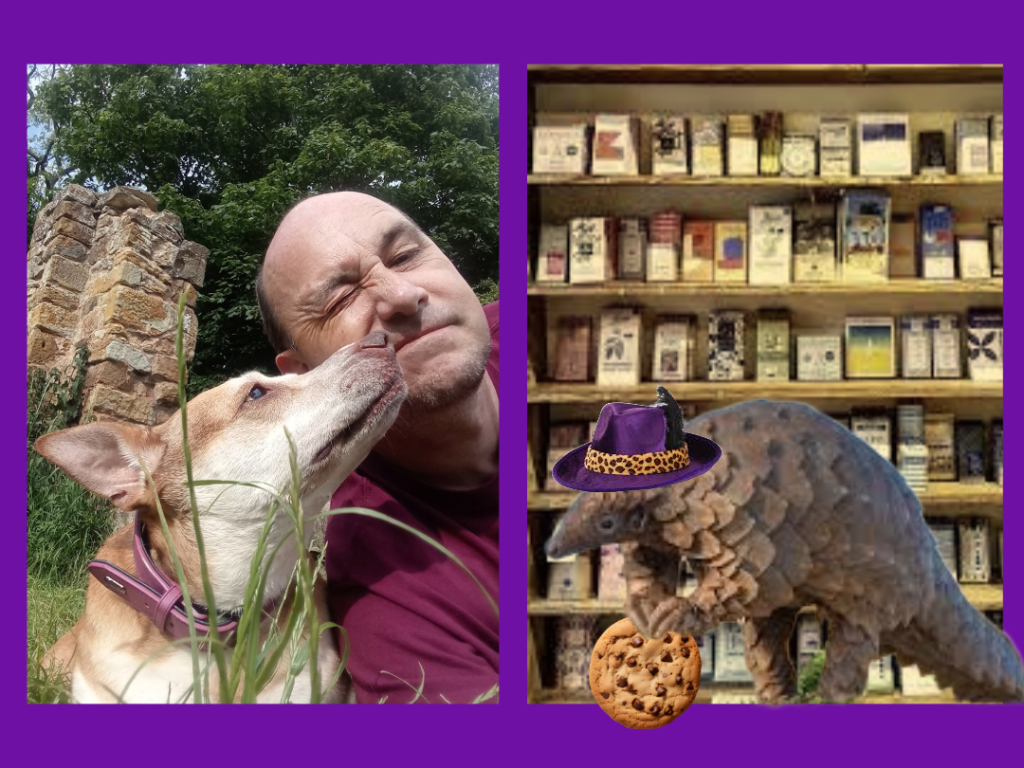
Leigh Loveday grew up on the South Wales coast and now lives in the English Midlands, besieged by cats and foxes. He edits videogame blurb by day and writes fiction aggressively slowly by night, with stories landing in the likes of Uncharted, Cosmic Horror Monthly and Shoreline of Infinity.
