J.R. Howell
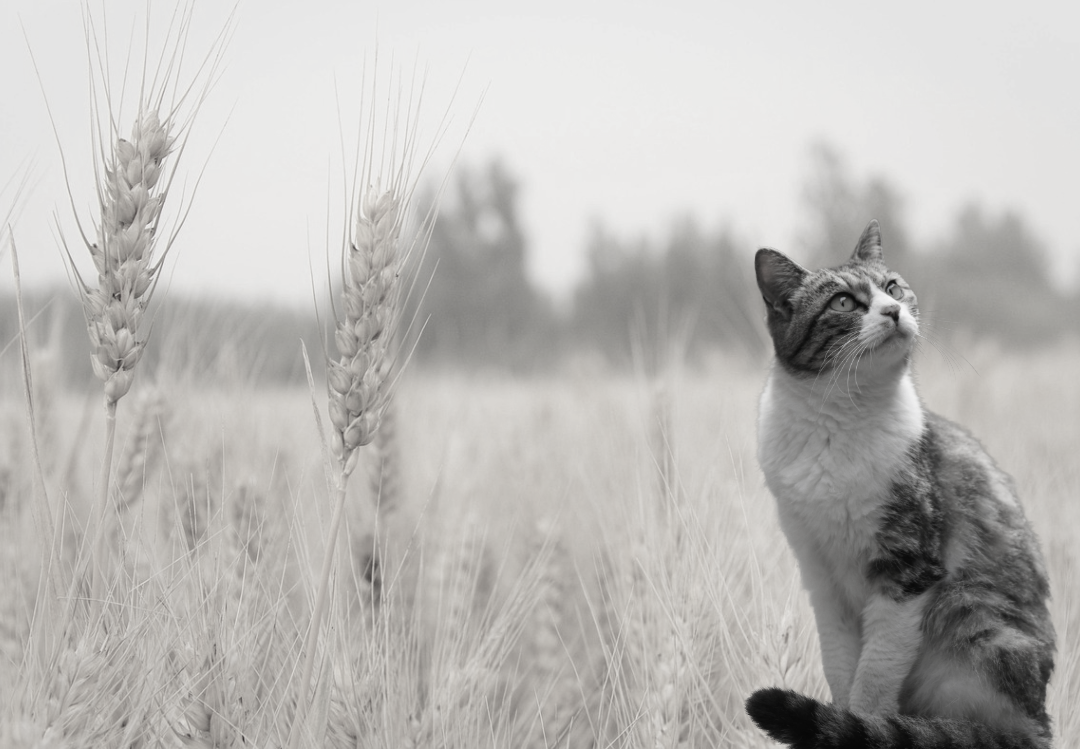
You find me perched over the corpse of the last living ribbonswallow on Golden Island, its throat torn open from my uncareful fangs. How did it taste? you’re probably wondering. Unremarkable, like a chicken. And bitter, as far as victories go.
Your actual question —”why?”— is less simple. If I were mincing, I would say it’s because the ribbonswallow is the vorik beetle’s only natural predator on Golden Island. But such an answer would only heighten your curiosity – and curiosity can be dangerous, you know.
Instead, look out over the dilapidated wheat fields and shimmering hillsides. Revel in the ships swiftly groaning toward dusk. Let me explain.
***
I arrived at Golden Island on a ship in the arms of a young girl. Ella.
Plague had ripped through the city like a swarm of locusts. Her merchant father plotted as quick an escape as he could, stowing his family away on one of the few supply ships still permitted to leave the city. Golden Island — named for its rolling hills of wheat — housed a new, remote settlement, he’d explained, one his ventures had helped fund. It offered refuge from the plague.
But Ella – she didn’t want to go.
Home was where her brother was. Not his body or his grave (he never got a proper burial; the plague struck fast and hard, and a cart came, and he was gone), but everything he had loved and touched: the oak tree he had taught her to climb, two sturdy sticks that became swords under the stars, and even the cute girl at the fruit stand, who took turns flirting with them both.
I loved to knock over apples to give Ella an edge. Each of those dozen accidental fingerbrushes paved the way to a kiss. Ella had been too preoccupied to notice her brother around the corner with a fistful of fresh-picked daisies; she never saw how he turned and acquiesced. When he gifted her the daisies before dinnertime, she said only: “I accept your apology for making me peel all the carrots.”
But she knew, deep down, in that inexplicable way, the kind thing he had done. When you love someone, there are always ways of knowing how they loved you in return. Even if they never tell you.
After enduring a month of quarantine and several weeks at sea, Ella tried to love the island. She carried me across her shoulders through the wheat fields. The fresh air was good for her, but the sparsely populated island was not; there were no others her age, cute girls at fruit stands, or brothers picking fights with wooden swords. Just their absence.
Ribbonswallows were everywhere then, their long tails rippling and shushing over wheat stalks like prismatic waves. Ella scolded me the first time I pounced on one. They were dull and slow, unexposed to feline wit and prowess. But she clicked her tongue and jerked me away.
“No, darling. Father said not to let you eat them.”
Vorik beetles were everywhere then too. Small, golden bugs nibbling on half-mangled stalks.
We watched together as the ribbonswallow inspected one such stalk, then split the gleaming exoskeleton of a beetle with a sharp stab of its beak.
***
The first time Ella laid a knife across the delicate skin of her wrist, I was curled on her chest.
Her heart thrashed wildly, waking me. Her knuckles shone white over the handle, and the dull blade bit just enough of her pale flesh to turn it pink. She sucked her teeth.
“I wish I’d died with him,” she whispered through a tight throat. Her hand trembled. “I wish he hadn’t left me alone.”
Ever the loving companion, I employed an age-old distraction tactic: I stood, blanketing her entire face with my silk-soft body.
“Go away,” she said, rather ungratefully.
I stepped onto her stomach, giving the illusion of obedience, before falling into a full-body stretch that displayed the entirety of my butthole. An obvious demonstration of affection, I thought, until she pushed me off of the bed.
And good thing she did; a beetle ambled lazily across the dirt floor. I trapped it with my paw.
Above, Ella hissed, a sound that raked my chest like sharp claws. If she didn’t want my gentle weight, the soft caress of my fur, or even the unerring presence of my butthole, what else could I do?
She hissed again. The beetle clicked and wriggled under my paw, desperate to return to the fields it called home, despite the birds that threatened its livelihood.
I lifted my paw, allowing it to flee; it had given me an idea.
***
My plan to get Ella back home was quite simple: kill the ribbonswallows, allow the beetles to devour the wheat unimpeded, and let hunger force Ella’s father to take them home.
Clever, no? Perhaps it would have been, if Ella hadn’t tried to find me before she left. Foolish girl.
All in all, the birds posed no challenge. After only a season, the fields lay broken and bare. Famine strangled the settlement like a plague. Slaying the final ribbonswallow was simply symbolic; by the time it drew its final breath, the ships were already loaded and unanchored.
In a deep-down, inexplicable way, I knew you weren’t aboard the departing ships. You couldn’t find me in any of the cabins or boxes, and your father wouldn’t let you wander away to look, one last time, for a long-lost cat, so you snuck away when no one was watching. They didn’t know you were gone; they left.
I never tell you any of this, of course; I am, quite literally, a cat. But when you find me on the crest of a hill at dusk with the last ribbonswallow limp beneath my paw and ask me “why?”, you already know the answer.
What J.R. said about the prompt:
Like the cat in this story, my cats are avid hunters, and will hopefully decimate South Carolina’s population of palmetto beetles at some point in the future.
J. R. Howell lives with her wife and menagerie of pets in South Carolina. Importantly, she also has a sword. You can find her on Threads @jrhowellwrites and Instagram.
Read more from J.R:
1.
2.
 TRASH CAT LIT