Nora Nadjarian
The sea never ended when we were in it and we always wanted more, please, more, please, as we plunged, and our mothers called us from the shore and we pretended not to hear them. Our skin and hair and face all salty and our mothers on the shore, waiting, with their aprons on, our fathers in the coffee shop, drinking ouzo and cheap wine, playing backgammon, rolling the dice. On occasion so drunk they could barely speak or count or walk home.
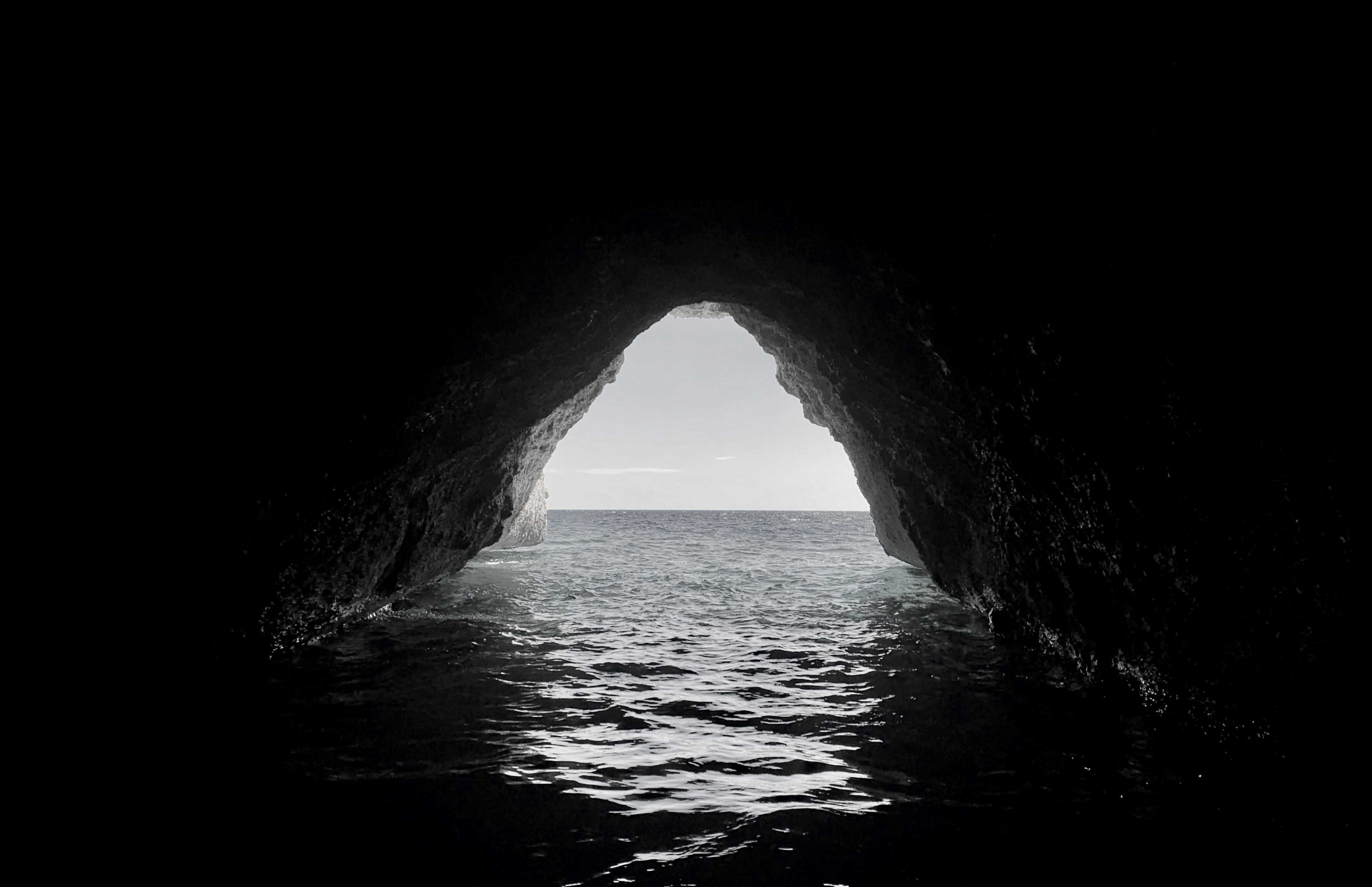
We’d hide our sealskins in our dark sea cave at the far end of the beach, where no one would dare to go, where the sea curled dark and licked jagged cliffs, where our voices echoed, reckless with freedom. We called out words and parts of them came back to us. Freedom, dom, Madness, ness, Fun, fun… We’d sing and laugh while swimming back to the shore. We dried each other out, put our plaid skirts and white blouses and flat shoes back on, walked home. The crack-of-dawn pink tinted our skins and we could almost hear our mothers mutter in their sleep, like Queens in forgotten fairy-tales, “Our daughters! What shall we do about our wilful daughters!” We’d snigger into each other’s faces, part ways and say we’d meet the following night, same time. I’d hurry into bed, my bed, I’d place my wet head on my pillow which smelled so sweet, so human.
There were three of us. There were three of us together, always: Maria and Koull and I, our whole childhood a strange story of knowing and not knowing, believing and not believing, being told and not being told where we came from. I told them once that I was sure I’d been adopted, that my parents couldn’t possibly have had me, and that I wanted to meet my real parents under the sea. Maria and Koull had life stories with asterisks on every other sentence, and the space next to each asterisk had been left blank. As slippery as fish, our lives.
At school, they called Koull the slut. Her mother had run off with the young, scarred sailor, abandoning a dark newborn whose cries pierced her grandmother’s ears. She told us she’d been with a foreign man in the summer, a tourist, who had photographed her underwater for an exhibition he was preparing back in Germany. The title of his exhibition was ‘The Others’, said Koull. “Maybe this is us,” she said, “this name. Maybe we are not these, but those, not this, but that.” That other. He loved her, the tourist said. He asked her not to leave. “But I am mine, not yours,” she told him, “I am an Other and can never be like you.”
“We could never be like them, baby,” said Maria. “Not even if we tried for a million years.” She called everyone Baby, smoking cigarette after cigarette. Energy spilled out of her. Her ribs, so thin and prominent, her body alert, fast and sinewy, restless on land, slick in water. And they all admired her from afar. “Sweetheart… so strong, so strong, how is that possible?” And she replied: “Baby, do you know what weakness tastes like? Like blood and broken teeth. I’ve tasted both.” I loved her with all my heart. The way she walked alongside me, the way she showed me how to be.
The day I put make-up on for the first time, my head was pounding in the heat. The eye shadow was the shiniest I could find in the drawer where I kept my secrets, the lip gloss made my lips look lusciously bold, and the low-cut sequin dress clung to me like a second skin. When the light hit the sequins, I looked like I was on fire. And I was. I was finally going to be the person I’d dreamt of being, for as long as I could remember. In the mirror there was a tall, pale girl with bright green eyes and long, black hair.
I’d told my family, they knew. My father had slapped me when I’d started wearing skirts. The weight of his hand on my face, and the perfume bottle had gone flying, smashed against the wall, left an orange stain there. A red mist hung in the air, smelled of the pain of a thousand words of abuse. And I crawled out, crawled out of the hole, day after day, with Koull and Maria telling me “Yes”, telling me “Baby, yes”, telling me “Yes, we are who we imagined ourselves to be.’
As I walked in my heels past the coffee shop and the dark-clothed men rolled the dice, my bracelets clicked against each other, my heart and lungs filled, I held my head high. I was finally becoming.
This piece was previously published by Ellipsis Zine
Nora Nadjarian is an author from Cyprus. Her short fiction has been published in various journals including Milk Candy Review, Ghost Parachute, Fractured Lit, CRAFT, matchbook, Centaur, Pithead Chapel and was chosen for Wigleaf‘s Top 50 Very Short Fictions of 2022 (selected by Kathy Fish). She placed third in the Welkin Writing Prize in 2025. She is also a widely published poet and her latest poetry collection Iktsuarpok is available from Broken Sleep Books.
https://www.brokensleepbooks.com/product-page/nora-nadjarian-iktsuarpok
Socials: Bluesky, X, Instagram
Read more from Nora:
Okay Donkey – ‘Join the Dots‘
Craft – ‘My Sister’s Life as a Series of Rooms‘
Here on Trash Cat Lit – ‘Baby, Be Mine‘
 TRASH CAT LIT