Zeina Abi Ghosn
Content Warning
dementia
Arabic music blasts from the old radio in the kitchen. Emily picks up some envelopes from the table, puts them in her shoulder bag. On the way to her bedroom, she hums along to a familiar tune. Her mother’s wedding dress is in an old wardrobe box; Emily takes it out, turns in circles with it held to her chest. She places the veil over her head, blushing when she imagines Philippe lifting it up. She admires her reflection in the small window; he will love her youthful skin.
The dress pressed to Emily’s body feels silky smooth, she’s eager to show her fiancé, Philippe, but for now, it must go back in the box. She lays it among yellowed paper with great care then goes to the old pinewood dresser that belonged to her parents. It’s ageing woodgrain holds so many memories. She brushes her hands over it, and the letters stacked there. Her and Philippe’s memories.
They’ve planned the wedding to take place in the middle of Beirut. Emily can already imagine the bouquets of red roses lining the ceremony. She turns her engagement ring as she practices walking down the aisle. Two steps forward with a brief pause, making sure to smile at her loved ones.
#
As Emily makes her way to the store, piano music from a nearby café reminds her of the day her fiancé proposed. They were standing underneath an ancient archway when Philippe went down on one knee and asked if she would marry him. Her heart was drumming in her chest as the word “yes” formed on her lips.
Emily needs to buy milk but she stalls, desperate to see the postman in the neighborhood. Today’s letter could be the one in which Philippe announces that he’s returning soon. Then she’ll finally wear the wedding dress for real, and people will throw rice on them.
There are papers wedged on one of the neighbor’s front gate, Emily yanks them back and forth, trying to slide them out without ripping them apart. When they are free, she tucks them in her bag. Then she’s drawn to the cars parked on both sides of the busy street. She collects a few red papers from the windscreens and places them in her bag too.
People start calling Emily’s name, telling her to “stop”, but today she won’t allow anyone to mess up her good mood. A man approaches, his hands waving frantically.
“Stop, you can’t take these.” He pulls the papers from her hand. “They’re tickets!”
“No, they’re mine!” Emily cries, trying to snatch them back. “My fiancé sent them to me!”
A man across the street nudges his friend and says, “Look, Emily is waiting for her letter again.”
The neighbors gather around Emily as she desperately tries to wrestle the tickets from the man’s hand.
“I’m with the police!” He shouts. “You can’t take these parking tickets!” A woman steps in front of him.
“Sorry officer, you see she’s confused,” she explains, placing a hand on Emily’s shoulder. “Her fiancé was a French officer during the French mandate. Sometimes she thinks it’s the 1940s.”
Emily clutches the papers to her chest while a hundred questions swirl through her mind.
“He was deployed in Beirut,” the neighbour continues. “He hasn’t sent a letter in over sixty years.”
Emily glances around, looking for answers. She sees the reflection in a car window, so different from the young woman in the wedding dress she saw earlier. This reflection morphs into a woman in her seventies. Emily touches the wrinkles around her own eyes and frowns.
The neighbors gather bits of paper that have been dropped on the street. “It’s 2005,” a woman gently explains to Emily as she presses some papers into her hands. Emily gives the policeman the parking tickets, feeling embarrassed that her memory has failed her. The neighbors help her buy her groceries, and walk her home.
#
Later that evening, the wind blows some of the papers off the balcony. The same wind ruffles Emily’s hair – she can almost hear Philippe singing what a treasure she is to him. She has a basket tied to a rope, she lowers it to the street below and patiently waits for someone to pass by.
The real past plays on a loop in her mind. Her body shakes when she remembers the nights she cried herself to sleep, because her parents forced her to break up the engagement. She often tried to sneak out quietly to meet the postman, but her parents were always one step ahead of her, hiding Phillipe’s many letters.
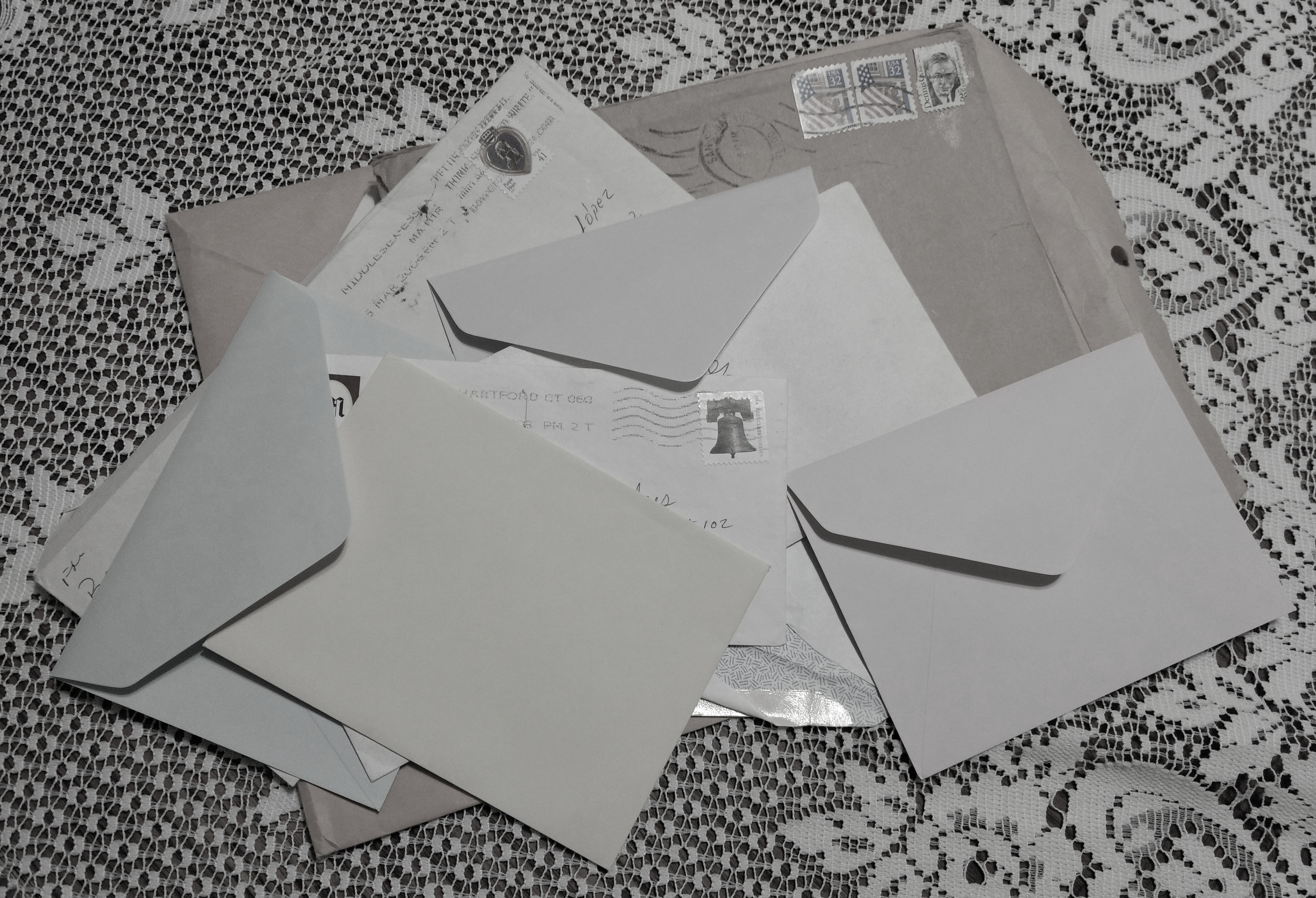
With frail hands Emily digs out one of those real letters from her shoulder bag – she had finally found them in a hidden compartment in the dresser – her fingers lovingly trace the French stamps and Philippe’s words.
Passersby are looking up at her balcony; they shake their heads and whisper to each other. Emily’s mind shivers between truth and fantasy, her heartbreak threatens to overwhelm her until she returns to being the young girl excited for her wedding,
In the street below, a young man stops and looks at her.
“The letter, please, could you get it?” Emily asks him.
He nods, picks up a paper and drops it into the basket. Emily gazes at the horizon, towards the Beirut sunsets that Philippe loved. She turns the ring on her finger, round and round, trying to recall the vows she had practiced that morning.
Tears roll down her cheeks as she pulls the basket slowly up to the balcony. She imagines the dress silken against her skin, the roses scenting the Beirut air, the rice getting caught in her veil. All while the piano music accompanies her down the aisle.
Could this be the letter she’s been waiting for?
Yes, Emily thinks as she reaches into the basket.
This is the one.
Zeina Abi Ghosn is a Lebanese writer and photographer. Inspired by the events of Lebanon and its surroundings, she’s working on a novella dedicated to the victims of the Beirut blast, while finishing her first novel. Her work appears in the Ceasefire Now! series by Alien Buddha Press and in Valiant Scribe. Three of her short fictions have been shortlisted in competitions.

Read more from Zeina:
Alien Buddha Press – ‘When the Lights Go Out’
Mukoli Magazine – ‘Two Stories’
 TRASH CAT LIT