Christina Tudor
Listen to Christina read her story here
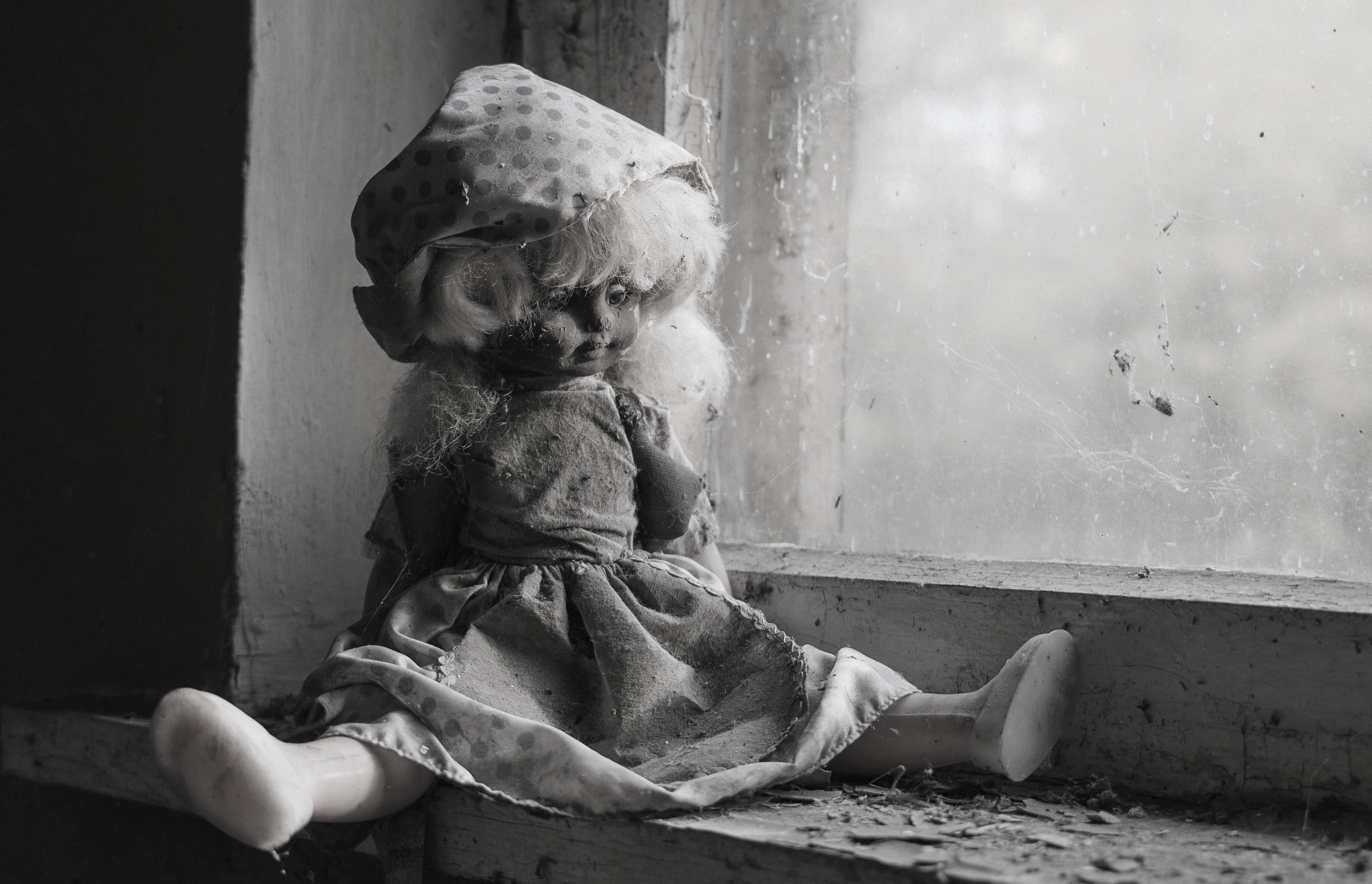
When I was born, I was half-formed and couldn’t breathe so doctors hooked me up to a machine to act as my lungs. My whole self fit in my mother’s palm. To save me, she fashioned me from herself. Told the doctors to take bits of her skin, her eyelashes, her fingernails, anything I didn’t have. When she recounted the story over the years, to friends, to my grandparents, to the strangers who would no doubt ask questions about the daughter in her arms who was more rag doll than human child, she would describe her pulsing desperation, her longing. She’s special, my mother told anyone who’d ask. I made her from myself, she’d say to explain why we were both missing pieces of ourselves. And her audience, often an unwilling participant in the song and dance, would smile a little too widely and retreat, nodding and wanting to seem okay with it just like my father who took me in his arms and hated what I reflected back at him. Her unruly hair, her vast ocean of need that spilled over into me, its unwilling recipient. His exit was swift, and not entirely unexpected.
At school, my teachers made metaphors out of my existence. Upcycling was all the rage, repurposing discarded things into something new. As a class, we made a model house from an old box of Fruit Roll-Ups and paper straws and napkins with the Dunkin’ Donuts logo on them. She’s just like this house, the teacher said to another classmate of mine who was pretending not to stare. She’s a bunch of things made into one. I smoothed a piece of tape over the plastic wrapping of Trader Joe’s raviolis to make a wall and wondered what everyone else was made from if not a bunch of parts making up a whole. I kept working on the house until it could stand on its own, used to making my peers glad they weren’t me. To them, it was like when a colony of bugs swarmed food someone had dropped on the sidewalk. It was a natural, everyday thing. But it looked obscene so people couldn’t look away.
In girlhood, my body felt more like thread that could easily be picked apart. I still had to grow into the parts of me that were from my mother’s body and I resented it. Resented her. And her extra wide hip, and her nails that dangled off my skinny fingers. At Target, we shopped for bras. An experience that is humiliating enough when you are not made of your mother’s skin. She waved away the salesgirl who held out measuring tape. I gave her that left tit, my mother said. I think I know it’s a 34C. The sixteen-year-old salesgirl eyed us, popped her gum, unlocked the dressing room without any follow-up questions. I liked being a ghost to her. I wanted to bottle up her indifference to me and take it home. Maybe brew it into an elixir I could give my mother.
None of the bras fit. Nothing did. Nothing would wrap around a body that was half girl, half woman, half self, and half something else. We settled on a 34C for the breast that was once my mother’s, who said I could stuff the other with cotton or a pair of socks. She turned me toward the mirror so she could adjust the straps. I squeezed my eyes shut because I hated mirrors and I expected her to hate them too. Because if I was this half-formed thing, she was this thing who had half of herself ripped away. We both felt the world’s double takes when people saw us coming. I wondered, for the first time, if she ever woke up in the night, and felt around for what once was. I wondered if she resented the parts of me that once belonged to her. I wondered if she ever wanted them back.
I squirmed out of view of the mirror, not wanting to see what reflected back at me. The two of us together. She pulled out an ugly polka-dotted sweater she must have hung on the back of the door without my noticing and started to force it over my head. Hold still, she said, adjusting it like you’d Velcro a shirt over a doll’s naked, plushy torso. It was just the kind of thing she’d wear to play bingo at church or run to the grocery store hoping to bump into someone who’d interrupt her life, ask her a question or two, give her just enough space to allow her to tell the story of how she saved me.
Can we please go? I said.
No, let me see. My mother forced me to face the mirror, ugly and under the fluorescence to make it all so much worse. Why are you acting this way?
I laughed. Because the answer was obvious. I saw who I would become and I fought her grip. She held onto the ugly sweater, tapped its chest. I knew what she’d say before she said it because in our comedy routine, we both have roles to play. I gave you my own rib, she hissed at me, looking at me through the mirror instead of facing me. I gave you myself.
I broke free, ripping the sweater from my head, leaving the tan bra in a tangled heap. I pulled my dress back over my head and ran from the image in the mirror, out of the room, the store, and toward the parking lot. I heard my mother’s footsteps echoing mine. I caught my breath, felt the air change around me, swallowed hard so I could breathe. I felt my mother behind me before she caught up.
Together, we had to slow down. We both only had one lung.
This piece was previously published by Gravity & Grit Vol. XI
Christina Tudor is a writer living in Washington, D.C. Her fiction has been featured in SmokeLong Quarterly, matchbook, HAD, Flash Frog, The Citron Review, Funicular Magazine, Best Small Fictions 2024, and more. She has received nominations for the Pushcart Prize and the Robert J. Dau Short Story Prize for Emerging Writers, and was a 2022 PEN America Emerging Voices Fellow in fiction.
Socials: X, Bluesky, Instagram
Podcast interview about this story: https://dcplpodcast.simplecast.com/episodes/get-lit-christina-tudor-melissa-scholes-young-cynthia-via-and-of-cieri
Read more from Christina:
Smokelong – ‘Judy Blume Didn’t Prepare Me for the Apocalypse‘
Matchbook – ‘Birthmark‘
 TRASH CAT LIT