Sophia Adamowicz
Listen to Sophia read her story
The following is transcribed from a scrap of parchment in the binding of Vatican manuscript 4551. Provenance: Italy, mid fourteenth century. Author unknown.
In the year of our Lord, 1312, a vision was granted unto me. I saw myself casting a net into Lago di Anguane and hauling up a catch of souls bedecked in shimmering scales. Their bodies thrashed with such force that their tender skin split asunder, and bones threaded out like mushroom filaments, knitting together to form Jesus Christ himself.
‘I will make you a fisher of men,’ the saviour declared.
Vita brevis.
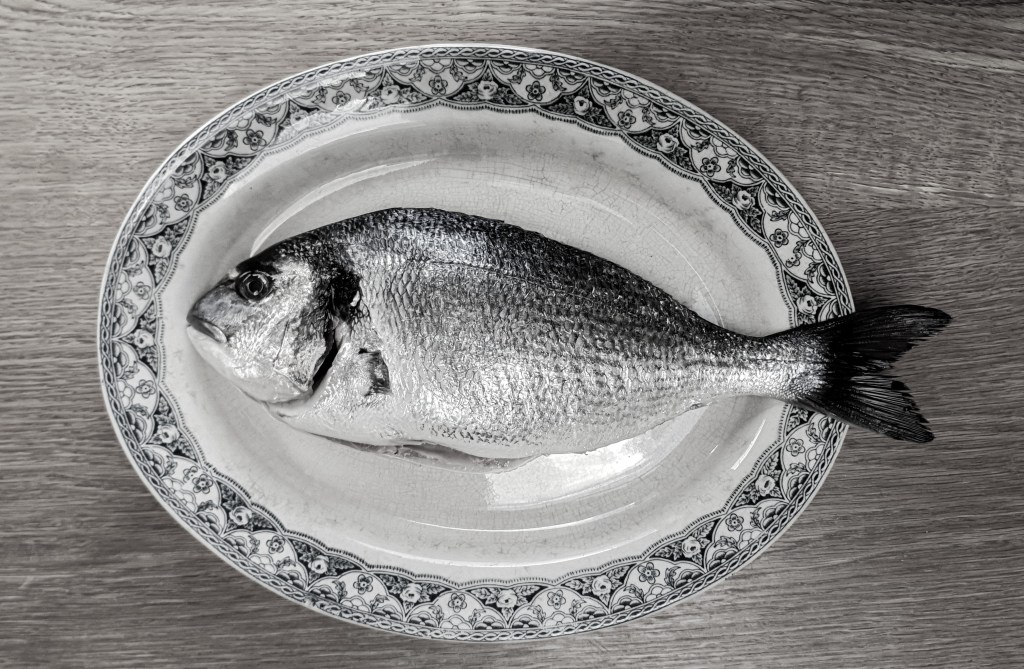
We cleared the ground of undergrowth and built our abbey on the lakeside. God blessed us for our devotion, or so I believed. On fast days, our plates groaned with fish that had fattened upon creatures in the sweet waters. Like butter, their flesh yielded to the slightest touch of a knife and melted on our tongues. The food tasted of my first and last, my Lucia, the deep, musty warmth of her body.
‘It is a sin,’ said Brother Matteo as he dabbed his mouth, shame skulking behind his eyes, ‘to glut the senses in an hour of self-denial.’
‘If you are no longer called to communal life,’ I said, ‘seek salvation alone in the wilderness.’
We found him on the mountainside forty days later, a bundle of bone in sun-bleached sacking, and interred his remains in the chapel.
Mors venit.
But soon, the cloisters echoed with the cry of, ‘A miracle!’
Brother Matteo had clawed out of the grave and dragged himself before the altar, the language of angels spilling from his blue lips. The brethren declared this twitching Lazarus a saint. They dressed his leaking body in cloth of purest white. Offices composed in his honour rang through the chapel. So strong were our voices that twenty men sounded like twenty times twenty.
Omnia mors perimit.
Alas, all flesh is hay. The precentor coughed, and his eyes widened as fresh notes, inked in red, blotched his music: a song of death.
Many sang that song. The choir stalls fell silent.
On the third day, I stopped burying them—an unchristian practice, I confess, but the corpses, restless, escaped the confines of their tombs hours after their last rites had been performed.
I asked God why He spared me, and a voice in my ear whispered, ‘You have a higher purpose; you have been chosen to oversee.’
Ad mortem festinamus.
I bear witness. What else can I do when the dead rise from dust, raking off their skin and joining bone to bone to create a new man composed of multitudes, large enough to scrape against the chapel roof and send carved angels crashing to the ground?
It is an unholy thing. We should never have come here—the lake was teeming with demons. We lapped them up like dogs and, now, the demons have built their own house on dry land, a house of the dead.
Kyrie, eleison.
Something is scratching at the door of the scriptorium. I cannot keep it out much longer.
‘You must construct a great shrine,’ the devil in my ear whispers. ‘Pilgrims will come from far and wide to view this miracle. To touch Man Made New. To pluck his hair and scrape his skin and cut his nails. To mix these relics with the waters of Lago di Anguane, drink and be cured. Word of our order will spread.’
Christe, eleison.
Lord, have mercy on me.
Note on the text: This fragment, a unique example of what has been termed ‘medieval sci-fi’ (Walker: 2010), is the only surviving text from the scriptorium of the Abbazia di Sant’Antonio before it was destroyed by fire in 1348. Scholars have long debated its meaning: for decades, the dominant theories were that it documented the Black Death’s arrival at the abbey or the outbreak of a parasitic infection. However, archaeological evidence of bones from the mass grave by Lake Anguane confirm neither the presence of Yersinia pestis nor any known parasite.
Sophia would like to acknowledge that the concept of this piece was co-created with Timothy Bazalgette
Sophia Adamowicz (she/they) is a writer and tutor based in Cambridge, UK. Her work, both fiction and nonfiction, has appeared in several publications including Cunning Folk, Crow & Cross Keys, Haven Speculative and Trash Cat Lit. Their debut folk horror novel, The Brink, was published by Ruadán Books in 2026. Find her on Substack
Connect with Sophia

Read more from Sophia:
1.
2.
Here on Trash Cat Lit – ‘Closing Time at Mr Marvell’s Museum of Curiosities‘, ‘Wixton Fen‘, ‘Fair Game‘, and ‘Fairy Bell‘
