Anne Howkins
Listen to Anne read her story
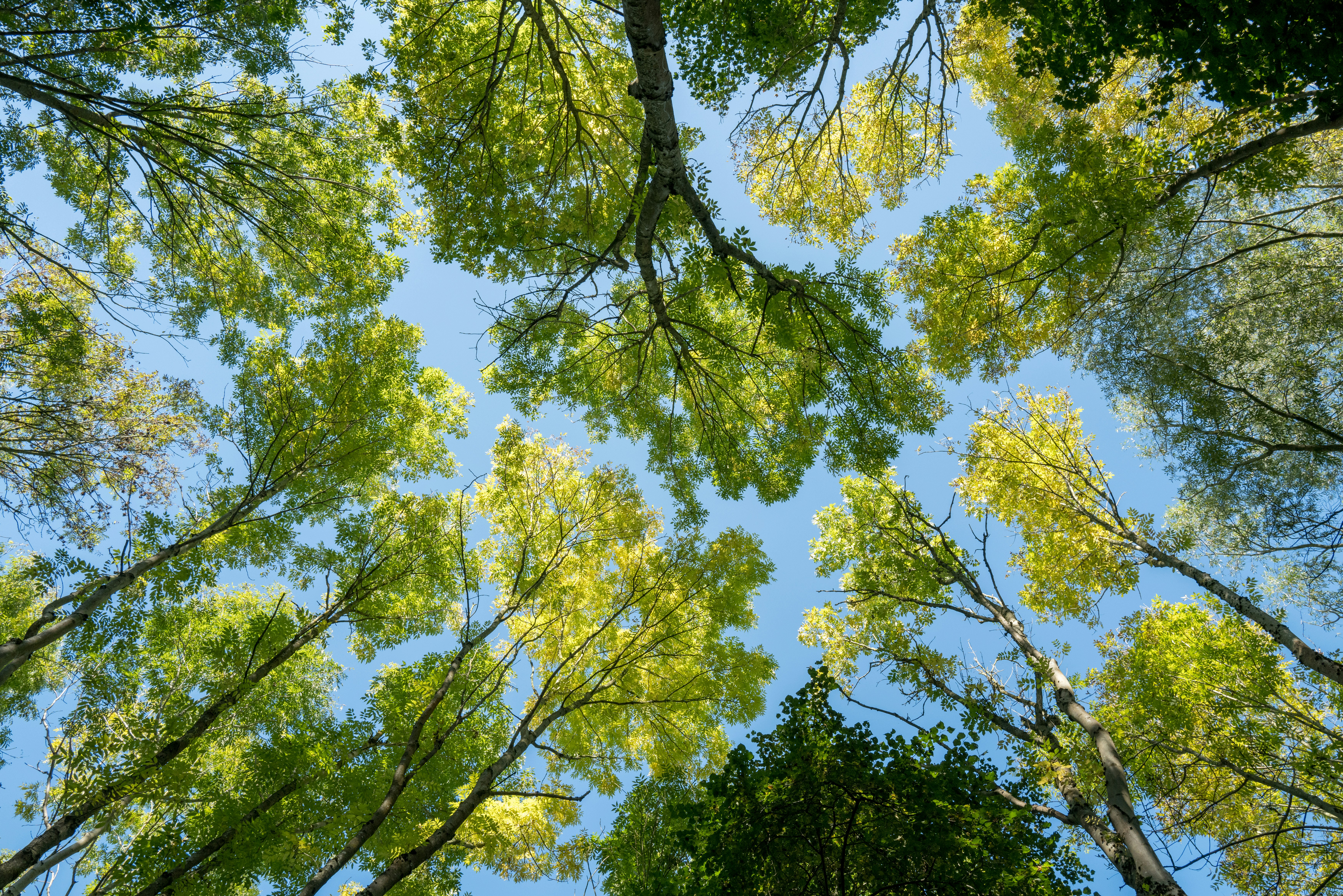
Your dad, the dendrologist, is on a mission to change the way people think about trees. In front of an audience his arms windmill like storm-blown branches as he describes their underground conversations. The chemical messages whispered across miles of fungal networks; tree to tree, wood to wood, forest to forest. Sometimes this conversation is about sharing resources – light, water, nutrients; sometimes it’s a cry for help, an alert for the forest to begin to defend itself.
After your mum left, and the house echoed with unspoken sadness and blame, dad took you to his favourite beech wood. You remember shrugging yourself into a soft forest floor, breathing the sweet fungal smell as you lay, ear pressed to the earth, straining to hear the worms, the beetles, and the underground conversations of beech and oak. Rolling onto your back, watching the serrated gaps in the canopy shift gently, the leaves never touching. Dad telling you each tree kept within its boundary, knew to leave space for the sun to dapple through. He said he and your mum had forgotten how to behave like trees, they’d overstepped boundaries, greedy for sunlight, blocked its loving touch on each other’s skin.
All trees mattered to your dad, but some were special. He’d often speak of a lone sycamore that had survived acid rain and drought, the effects of terrible disasters thousands of miles away. He spoke of this magnificent tree with reverence. You were watching the news when you saw it had been brutalised by vandals with a chainsaw. Dad was bereft.
After the sycamore was felled, it was like your mum leaving all over again, the way nothing made him smile, not even Sunday picnics in his favourite wood.
Dad was hearing rumours of tree surgeons getting weird rashes and suppurating wounds that wouldn’t heal. Then an ecologist found anomalies in the forest floor – chemicals only seen in factories, fight or flight hormones in fungi, ants excreting toxins – and the scientists began to worry. When a forestry worker died, his body racked with poison, alarm bells sounded.
Now, like a forensic scientist, your dad tramps through woods and forests in a hazmat suit. He tweezers leaves and bark samples into specimen jars and pushes borers into the forest bed, excavates for fungi, and traps invertebrates in transparent prisons, awaiting their execution and dissection. Every field trip leaves dad grief-crushed, storm-felled.
The dendrologists stand in front of crime-scene maps, laser pointers outlining perfect circles of toxic forest floor spreading inexorably across farmland and gardens, the site of the lone sycamore as its epicentre. They use phrases like human, extinction event, hard choices. Arboreta and parks lock their gates, streets reverberate to the shredding of silvery birches, bonfires burn endlessly. Still the trees whisper.
When he’s sad, tired, or maybe a little drunk, your dad says he wishes that trees were the dominant species, not humans. You don’t tell him you only want to hug your oak-solid parents in the dappled sunlight, your feet anchored in the forest floor, the trees whispering of nothing but sunlight and rain.
Anne’s little stories have appeared at in print and online. She writes in the time carved out between looking after the finances of a charity, keeping herself fit and being grandmother to a cute, but demanding, toddler.
Connect with Anne
Read more from Anne:
Thin Skin – ‘I’m On My Second Glass of a Decent Viognier’
WestWord – ‘Desertion’
Here on Trash Cat Lit: The Odyssey of the Daughter of the King of Spain – Anne Howkins
 TRASH CAT LIT