Spring General Issue – Reprints
Following the launch of each of our issues, we cajole one or more of the contributors into a mini interview with the Trash Cat.
Here they will reveal some writing wisdom and tell you what trash critter they identify with most. Important stuff like that.
Today, we have Mark Peters. You can read his quietly menacing flash fiction, Last Rites of Spring HERE
Q: What piece of writing advice/ crafting rule would you trash?
A: Although this isn’t a very specific answer, most advice that includes the words “always” or “never” would be nice to send to the trash bin. Even if this advice is given by a well-known author. All writers are different and, like most other folks, have several competing demands for their time and energy. What works for one person may not work for the next. What feels smooth and natural to the first might be cumbersome and unrealistic for the second. So whether it’s (for example) “always outline” or “never outline”, glean whatever helpful information you can from the advice but don’t accept it as an unalterable truth.
Q: Which writers and magazines do you go to to find treasure to read?
A: There are so many! I try to read at least one short story every day, and more than that, if time allows. Sometimes I reach back to old favorites (I’m currently working through a collection of one hundred Ray Bradbury stories). Other times I’m a grazer, scanning through genre magazines like Clarkesworld, The Dark, and Beneath Ceaseless Skies, hoping for recent gems. I’ve found some wonderful tales by writers I might not have otherwise discovered. Plus, I’m always reading stories written by author friends, or which have been recommended to me online.
Q: What trash animal do you most identify with?
A: I’ll have to go with the squirrel! I’m curious, often skittish, and a bit eccentric. But I can also be approachable once I’m comfortable in a given situation.
Q: When your writing mojo is trashed, how do you recharge?
A: Usually I’ll take a break from writing, even if it’s for a few days or a week. Having some time away from the page allows me to refresh the creative part of my mind, and I find a new wave of enthusiasm once I return to whatever piece of fiction I’d been working on. During this non-writing time, I’ll focus on other hobbies, like reading for pure enjoyment or watching movies. I’ll admit I’m not the most disciplined writer, so my periods of productivity tend to be more sporadic as it is.
Q: If you could offer three tips to writing short treasures, what would they be?
A: As stated earlier, no advice should be one-size-fits-all. But these are some things that seem to work for me.
First, take your time and focus on quality over quantity. This is going to look different for every writer. Some might consider completing two or three stories in a year productive, others might be disappointed if they “only” write twenty or thirty. Regardless, don’t rush to get to the next piece. There’s always excitement in moving onto something new and fresh, but that idea will still be there, even if you have to wait a bit longer! This doesn’t mean you should tinker endlessly with a story; there is a point at which you have to tell yourself “enough is enough”. I’m just suggesting you take a step back and assess whether you really feel the piece is ready to submit to the market, or if there is still noticeable room for improvement. Having an honest critique partner can be hugely beneficial in this regard, especially if you’re unsure about a particular story.
Next, stop comparing yourself to other writers. Yes, there are going to be writers who are younger than you and who are wildly successful from a commercial standpoint. Yes, there are going to be writers who sell to one of your dream markets on their first attempt, even if you’ve been trying to crack that same market for years. And yes, there are going to be writers who win awards for which you’ve never come close to being nominated. But jealousy will only serve to damage confidence in your own talent, and open the door for the dreaded Imposter Syndrome to sneak in. Everyone’s writing journey is different, and “success” can mean many things. Think about what you truly value in life and align your writing goals to these values.
Finally, don’t forget about description and setting! I’ve read so many stories which have real-feeling characters, captivating plots, and thematic resonance, yet feel as though they take place in an empty room. There’s nothing that paints a picture in the reader’s mind, nothing to immerse them in the world of the story. This doesn’t need to be anything too lengthy or verbose; just a sentence or two can add depth to a piece. For example, if your character walks into a farmhouse to meet with an old friend, don’t jump right into their conversation. Mention the corn broom leaning in the corner. Mention the shaggy dog nestled before the hearth. Mention the smell of beef stew wafting in from the kitchen. Of course, word limit constraints may come into play (especially for flash fiction), but there are ways to create atmosphere and setting while also maintaining an economy of words.
Q: What is one thing, if spotted in a crowded charity shop/thrift store, you would just have to buy
A: Probably something that would evoke a feeling of nostalgia: an old board game I used to play, or a book I read when I was younger. Even better if it’s something I can give to my kids for their own enjoyment.
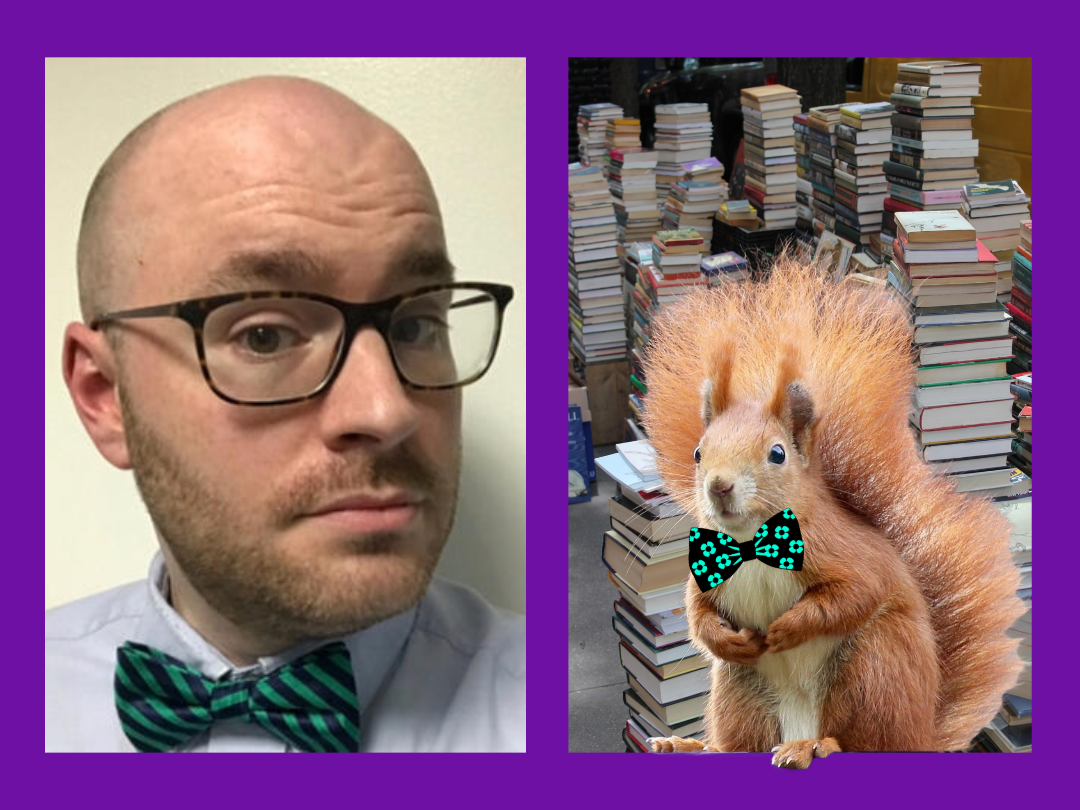
Mark Peters is an American writer of speculative fiction. He revels in the strange, the surreal, and the whimsical. Some of Mark’s work has appeared in CommuterLit, Altered Reality Magazine, and Sage Cigarettes.
When he’s not reading or writing, Mark enjoys spending time with his family in upstate New York
 TRASH CAT LIT