

If you’ve read any of our submission calls, you’ll know that Trash Cat is always asking for STORY and VOICE. We thought we’d let you know what that means to us, because, as with all things in storytelling; these things can be subjective.
Tell us a good STORY
“Well yeah,” you say. “Obviously!” Because that’s what fiction writers do isn’t it? Only we’ve observed, as we’ve read for all our previous issues, that some subs lack STORY. They might have wonderful scenes and settings, appealing and engaging characters, but not enough happens to these characters, in these settings, for us.
We believe STORY is the core part of every piece of fiction. The message. The change. The realisation. The pain. You might choose to tell the story of grief, a relationship starting or failing, a birth or death, a coming of age, friendship or family, childhood or ageing, an illness or condition, a transformation, a finding of hope or help or answers.
There are lots of stories you can tell, all those moments of human truth. Even if there are no humans in your piece, these moments should exist somewhere. This is what we think of as STORY. The core bit. You can choose to tell it in all sorts of ways – perhaps among layers of something else entirely, something that quietly hides the louder core. You might use metaphor or surrealism or magical realism. You might blend your STORY into a hermit crab. You might use beautiful, lyrical, descriptive language or a reportage style.
However you frame it, the STORY is the bit we need. Even if we have to work to pluck it from the words you’ve used. We don’t mind doing that work. The STORY doesn’t have to loom large from the page – but it does have to punch us upside the head. We want to see the character respond to what you have created, so we can FEEL along with them. We want movement between where the STORY starts and where it ends in your piece. This movement can be subtle or extreme, a moment or eons, but we want to see it, feel it, share it with your character/s.
We believe this applies to all genres. Horror and Sci-Fi still have to have that core bit even amongst all the blood and aliens and darkness. A love story. A survival story. A pain of loss story. If anything, speculative elements are often the most fantastic, imaginative ways to tell the STORY.
As writers, we may start with the STORY already in mind – I’m going to write about two people meeting and falling in love – then we build the rest around it, decide how best to tell it. How creatively and imaginatively. How simply or complex.
Other times we might have a scene or setting we want to explore – I’d love to write a dystopian piece where the planet has dried up – and the STORY has to reveal itself along the way. Such as finding love on a quest to find water.
So, that’s what we mean by STORY. The core bit. The heart of the matter. The bones under the meat. The treasure.
Now, find the VOICE
Another thing Trash Cat rattles on about is the narrative VOICE of the piece. The one telling the STORY. It needs to be clear, engaging and consistent (unless a change in a character’s voice is an intentional part of the arc).
VOICE can be light-hearted, matter-of-fact, pretentious, funny, sad, scary, dark and so much more. Think about how you want your STORY to be told. The VOICE you select needs to sound authentic– human/non-human, old/young, sick/sad/scared, as well as being appropriate to a time/location unless you want to deliberately go against the grain – in which case, be deliberate and consistent. Word choice, dialogue, inflection, use of humour can add to authenticity. In third person narratives, the VOICE often has more work to do. It needs to be effective with multiple characters and remain consistent.
Use the VOICE to draw the reader in. Make them want to stay and find out more. Use the tone and intricacies of it to reveal/drive the STORY, the motivations and desires of the characters. Make it one to remember long after the last line.
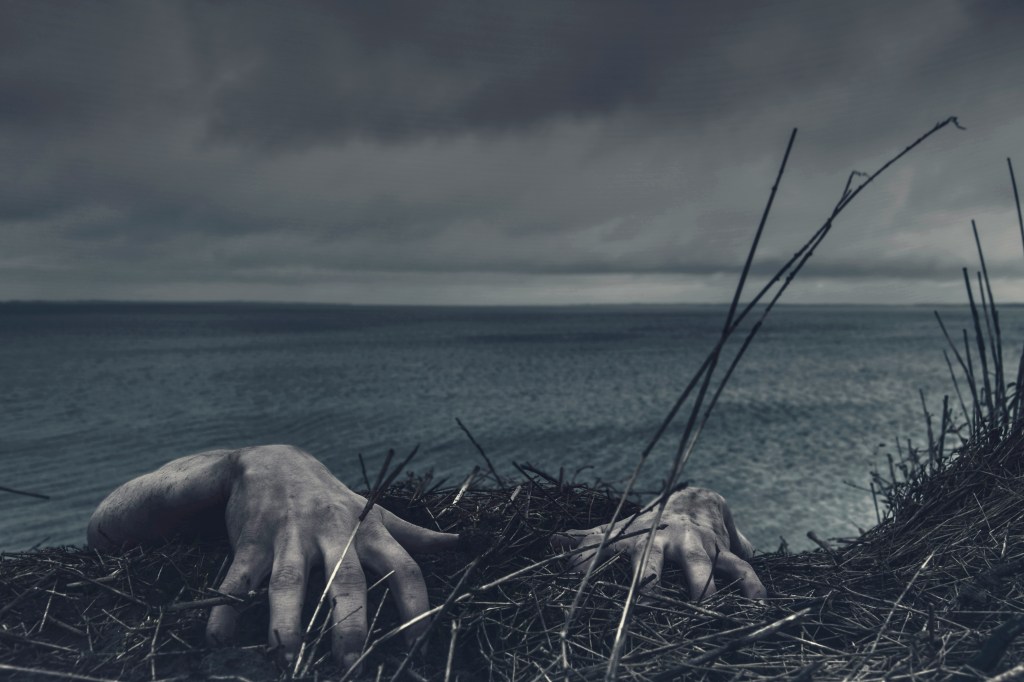
Excerpts from my Zombie Diary by Tracie Adams nails the STORY, wrapping it in a novel hermit structure.
Click image to read.
This piece by Anthony Neil Smith blew us away in our first issue. Cubby is a beautiful example of great VOICE. Click image to read.
Let us just say again, this is all subjective. This is Trash Cat’s take on what makes a piece of fiction right for our magazine. These are not “rules” of short fiction writing – we’re not fans of those anyway – they are just crafting tips to help make your work sing for the bin. The best way to understand what we mean by STORY and VOICE is to read the other flash and short stories in our Issues.
Thanks for reading
JP
Trash Cat
 TRASH CAT LIT