Autumn Pop-Up – Prompted Stories
Following the launch of each of our issues, we cajole one or more of the contributors into a mini interview with the Trash Cat.
Here they will reveal some writing wisdom and tell you what trash critter they identify with most. Important stuff like that.
Today, we have Andrew Monge, author of the dark, noir flash, Tag Number Forty-Two in our Prompted Stories issue. Read it HERE.
Q: What piece of writing advice/ crafting rule would you trash?
A: I love Elmore Leonard’s work, but I struggle with some of his “Ten Rules for Good Writing.” I’ll pick on his first point, which is to never open a book with the weather. For me, weather is an effective means to not only create the mood and setting of a piece, but also let the reader know how the characters are going to act. For example, read the opening to numerous 87th Precinct novels by Ed McBain and you’ll not only get a feel for the mood of the city, but you’ll also feel the sweat on your brow or the chill in your bones. It’s masterful, and sets the tone for what’s ahead.
Q: Which writers and magazines do you go to to find treasure to read?
A: Oh boy, I could go on and on with this one!
I have a few magazines that are must-buys for me when they come out: Guilty Crime Story Magazine, edited by Brandon Barrows; Rock and a Hard Place, edited by a panel of writers at RHP Press; and Dark Yonder, edited by Katy Munger and Eryk Pruitt. All three offer consistently excellent short fiction. Highly recommended.
For online reading I frequent sites like Punk Noir Magazine, Bristol Noir, and Tough Crime Magazine (and now, Trash Cat Lit). I like gritty tales that expose people’s innermost worries and secrets. These sites seem to have their finger on the pulse of that dark realism.
These venues and more have pointed me toward some of my favorite indie writers in today’s market, people like Coy Hall, M.E. Proctor, C.W. Blackwell, Russell Thayer, and Stephen Golds, to name a few. And really, that’s what I love about the high-quality digests and blogs out there right now: they’re a sampling of excellent fiction you can use as a springboard to hunt down more great stories.
I’d be remiss if I didn’t mention the crime fiction of Ed Brubaker and Sean Phillips, who have written most of my favorite graphic-novel adaptations. If you dig comics, or are looking for a gateway in, you can grab any of their titles and you’ll be blown away.
Q: What trash animal do you most identify with?
A: I have to go with the OG trash cat, the raccoon. I live in central Minnesota, and we have them all over the place (usually seen, unfortunately, on the side of the road). Most of my stories have something I’ve scavenged from my own life, so it seems fitting to give the nod to ole Rocky.
Q: When your writing mojo is trashed, how do you recharge?
A: If I have free time, I’m almost always reading. I usually have three titles going at once – physical book, EBook, and audiobook – so I can fill my quiet time with reading, whether standing in line at the grocery store or lying in bed at night. That being said, I have a chronic disease that gives me some pretty serious brain fog at times. During my dry spells I listen to music (I never grew out of 90’s grunge) or just sit in a quiet room and try to clear my mind.
Q: If you could offer three tips to writing short treasures, what would they be?
A: First, when it comes to a theme that every writer in a call is using, I take my initial thoughts and throw them out the window. For instance, Punk Noir had a “Betrayal” theme awhile back. My mind immediately went to “adultery” and “crime figure turns on partner.” I figured if those were what immediately popped into my head, I needed to get creative with how to handle the theme so I wasn’t writing something similar to everyone else. In that instance, I wrote a story called “All Alone on Apple Road” about a man who abandoned his pet on the side of the road, and it seemed to strike a chord with readers.
Next, I think it’s important to leave a part of yourself in the story. Flash fiction has such limited real estate in terms of word count, so you really need to grab readers’ attention. In my opinion, there’s no better way to do that than to write about a personal experience, a favorite topic, a pet peeve, whatever. If it’s something you’re passionate about, the reader will feel it.
Last, you have to write a killer last line. Everything before it should build to that final line, something that hits the reader right between the eyes and leaves them thinking about it long after the story is done.
Q: What is one thing, if spotted in a crowded thrift store, you would just have to buy?
A: I’m not much of a shopper outside of books. Anywhere I go, even if it’s not-for-sale books staged on a shelf, I always look at the titles. If you turned me loose in a charity/thrift store, I’d be looking for a diamond in the rough to add to my library at home. The internet has made it easy to track down treasures, but there’s nothing quite like the thrill of the hunt and finding a treasure in the wild.
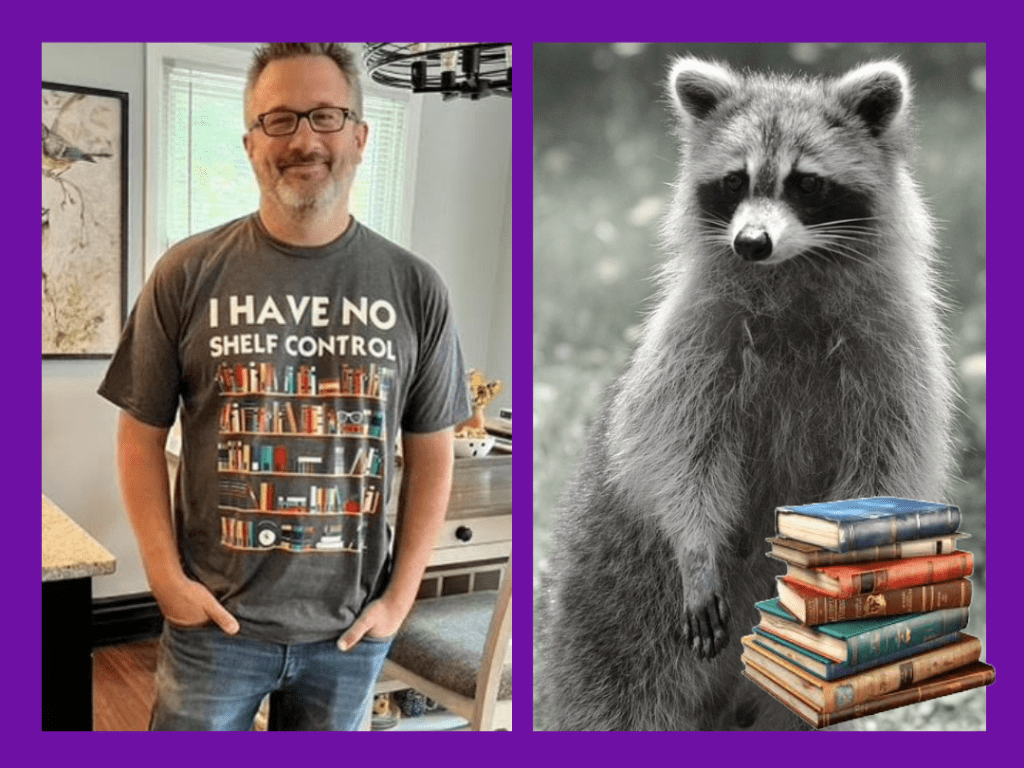
Andrew Monge lives in Minnesota with his wife and kids. A computer programmer by day and a voracious reader by night, he is a lifelong introvert who only finds his voice while writing. His work has appeared in Punk Noir Magazine.
Twitter: @MuchAdoAboutNil
 TRASH CAT LIT